
Tired All the Time? What a "Dysregulated Nervous System" Means (And How to Calm It)
You sleep seven hours and still wake up flat. You're wired at 11pm and wrecked at 2pm, and you're starting to wonder whether stress is part of the picture. This is written for men who are running on empty. Here's what people mean by a dysregulated nervous system, what the stress research says, and what has been tested for calming things down.
The short answer
When people talk about a "dysregulated nervous system", they're often describing a stress response that feels like it isn't switching off properly. It's a useful description. It isn't a medical diagnosis, and no single study has measured it as one thing.
There is plenty of research around stress, autonomic function, fatigue and breathing. That's where the useful evidence is. Researchers have a related idea called allostatic load, which neuroendocrinologist Bruce McEwen described as the wear and tear from a stress response that isn't turned off when it's no longer needed. A large survey found fatigue was most strongly linked with perceived stress and self-rated health. And a Stanford trial found five minutes a day of slow, exhale-focused breathing improved mood and slowed breathing rate over a month.
One thing comes before all of it: ongoing tiredness has plenty of possible causes, so it deserves a proper look from your GP before anyone puts it down to stress.
Key takeaways
"Dysregulated nervous system" is a description, not a diagnosis. Medical disorders of the autonomic nervous system are a separate matter.
The related research idea is allostatic load: wear and tear from a stress response that doesn't switch off.
In a survey of 2,483 adults, fatigue was most strongly linked with perceived stress and self-rated health. That's a link, not proof of cause.
In a Stanford trial, five minutes of daily cyclic sighing improved mood and slowed breathing rate more than mindfulness meditation.
Fatigue that lasts more than 2 weeks and isn't improving is worth a visit to your doctor.
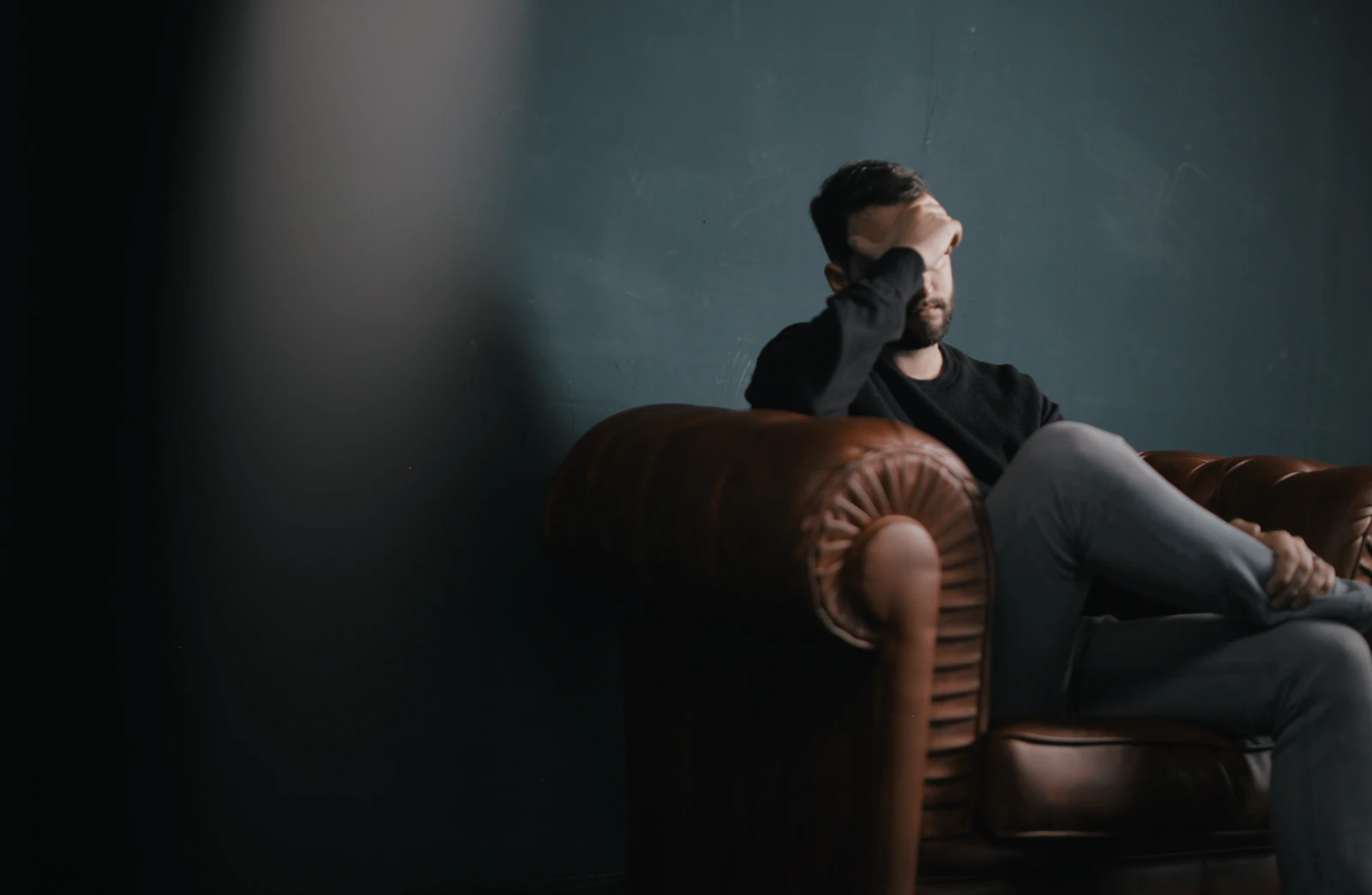
Photo by Nik Shuliahin on Unsplash
What is a dysregulated nervous system?
Start with the hardware. Your autonomic nervous system runs in the background, handling things like heart rate, blood pressure, digestion and temperature. It has two main divisions. The sympathetic side is the one known as "fight or flight": it raises heart rate, increases energy expenditure and puts digestion on hold. The parasympathetic side is "rest and digest", and it broadly works the other way (StatPearls, 2023).
Think of an accelerator and a brake. When people say their nervous system is dysregulated, they're often describing an accelerator that feels stuck on.
The research world has a related concept. Bruce McEwen and Eliot Stellar introduced the term allostatic load in 1993, and one form of it McEwen described is "failure to shut off allostatic activity after stress" (McEwen, 1998). He later defined allostatic load as "the wear and tear that results from either too much stress or from inefficient management of allostasis, e.g. not turning off the response when it is no longer needed" (McEwen, 2008).
Allostatic load is a cousin of the popular phrase, not a match for it. In research it is an index built from biomarkers such as C-reactive protein, resting heart rate and HbA1c, and a 2023 analysis of 67,126 people noted the field "has been hampered by the lack of a consistent definition" (McCrory et al., 2023). It measures bodies in cohort studies. It doesn't measure how you feel on a Tuesday afternoon.
It's also worth separating all of this from medical disorders of the autonomic nervous system. Those are real conditions, diagnosed through medical history, examination and, where appropriate, standardised laboratory testing (Cortez et al., 2026).
What are the signs of nervous system dysregulation?
There's no official checklist for it that I could find. The nearest published list is Healthdirect's signs of stress (Healthdirect, stress):
Changes in sleep patterns or feeling exhausted
Feeling "on edge" or unable to stop worrying
Difficulty concentrating
Changes in mood, irritability or anger (more on that in Why Am I So Angry?)
Physical reactions such as headaches, muscle tension or an upset stomach
Withdrawal from friends and family
Reliance on alcohol or other substances to cope
Here's the catch. Feeling tired, wired, tense or unable to switch off doesn't tell you what's causing it. Healthdirect lists lifestyle factors, mental health conditions, physical conditions such as anaemia, sleep problems and hormonal conditions, and some medicines among the causes of fatigue. Its advice is to see your doctor if you've had fatigue for more than 2 weeks and it's not getting better, or sooner if it's worrying you (Healthdirect, fatigue). Do that first.

Photo by Dipqi Ghozali on Unsplash
Why am I always tired?
If stress is part of your picture, here's what the research offers.
Stress and fatigue show up together. A nationally representative survey of 2,483 German adults measured both with standard questionnaires. Fatigue was most strongly associated with perceived stress (β = 0.30) and self-rated health (β = -0.27) (Kocalevent et al., 2011). A survey like this shows a link, not a cause.
One theory is that stress costs energy. Researchers at Columbia University and the University of Montreal have proposed an energetic model of allostatic load, where the "load" is "the additional energetic burden required to support allostasis and stress-induced energy needs" (Bobba-Alves, Juster and Picard, 2022). It's a model still to be tested, and it's about long-term health more than everyday tiredness, but it's a serious attempt to explain why chronic stress wears the body down.
Long-term stress can reshape the brain, at least in animals. Animal studies reviewed by McEwen found that chronic stress alters neurons in the amygdala, hippocampus and prefrontal cortex, regions involved in stress and emotion. In those animal studies, he reports that the changes "are largely reversible if the chronic stress lasts for weeks" (McEwen, 2008). What happens after months or years is less clear, and animal findings don't map neatly onto people.
Why can't I just think my way out of it?
One model helps here. Julian Thayer and colleagues pooled brain imaging studies on heart rate variability (HRV), the beat-to-beat variation in your heart rate. They found HRV was tied to activity in regions including the amygdala and the ventromedial prefrontal cortex, and from that they proposed that "the default response to uncertainty is the threat response", with input from the brain's appraisal systems needed "to overcome this bias during daily life" (Thayer et al., 2012).
That's their proposal, not a proven mechanism. It gives one possible explanation for something a lot of men recognise: deciding to relax doesn't necessarily make you relax.
My own view, and it is a view, is that understanding where a pattern came from and changing how your body responds are two different jobs. I've written more on that in Talk Therapy: Why You Should Think Twice.

Photo by Michael Held on Unsplash
How to calm your nervous system: what's been tested
If you searched for how to regulate your nervous system, slow breathing is one option that has been tested directly.
What the wider research found. A 2024 meta-analysis pooled 31 studies (1,133 people) of slow-paced breathing in nonclinical groups. It found significant immediate effects: lower systolic blood pressure, lower heart rate and higher heart rate variability. The effect on negative emotion, particularly perceived stress, was "marginal", and long-term benefits are yet to be established (Shao, Man and Lee, 2024).
Cyclic sighing, five minutes a day. A Stanford randomised controlled trial enrolled 108 people and compared three five-minute daily breathing practices with five minutes of mindfulness meditation over 28 days. In that trial, the exhale-focused practice, cyclic sighing, produced a greater improvement in mood and a greater drop in respiratory rate than mindfulness, both at p < 0.05 (Balban et al., 2023).
How to do it: inhale slowly through the nose, take a second, shorter inhale on top to fully fill the lungs, then slowly and fully exhale. Repeat for five minutes. If it makes you dizzy or uncomfortable, stop.
It was one trial, run remotely, with 21 to 33 people per group and no follow-up after four weeks. Worth trying. Not a miracle.
Healthdirect also lists progressive muscle relaxation, mindfulness, meditation, yoga and exercise for managing stress, along with support from a counsellor or psychologist (Healthdirect, stress).
Where memory reconsolidation fits
You'll see memory reconsolidation mentioned elsewhere on this site. It's the research area looking at whether an emotional memory can be updated after being reactivated. A 2021 systematic review reported significant PTSD symptom reduction across multiple RCTs, but noted nonrandom sampling in veteran populations, rated the evidence very low quality and called for more rigorous trials (Astill Wright et al., 2021). Those were clinical trials involving PTSD, not coaching or everyday stress.
It's one of the research areas I read and draw ideas from, and there's more on that in The Science of Subconscious Rewiring. It isn't evidence that Strong Shoulders coaching treats PTSD, fatigue or any other medical or psychological condition. Strong Shoulders is a coaching service, not a substitute for medical or psychological care. You can see how the work runs on the services page.
If you've been running on empty for a long time and you've already seen your GP, a conversation might help. The free 30-minute strategy session is a direct, confidential chat about what's going on for you and whether coaching is a suitable fit. No pressure, no sales pitch. If it's not the right fit, I'll tell you straight. Book your free strategy session
Frequently asked questions
Is a "nervous system reset" a real thing?
"Nervous system reset" is a search term, not a defined medical or research intervention. The studies here show that breathing practices can produce measurable immediate changes in blood pressure, heart rate and heart rate variability, and that five minutes of daily cyclic sighing improved mood over 28 days in one trial. They don't establish a lasting nervous system reset.
Is there a nervous system reset technique that has been tested?
Cyclic sighing is one breathing practice that has been through a randomised controlled trial: a slow inhale, a second inhale on top, then a long, full exhale, repeated for five minutes (Balban et al., 2023). The trial tested daily practice over a month. It didn't test one-off use in a stressful moment, or which technique works fastest.
How long does it take to heal a dysregulated nervous system?
I couldn't find a published timeline, which makes sense given it isn't a defined condition. The Stanford trial measured change over 28 days of daily practice and didn't follow people up afterwards. Be cautious of anyone who promises you a timeframe.
Is nervous system dysregulation a medical diagnosis?
No, it's a description. Disorders of the autonomic nervous system are medical conditions, and a 2026 consensus statement describes laboratory-based autonomic testing as an aid to diagnosis, "supplementing a thorough medical history and clinical examination" (Cortez et al., 2026). If something feels physically wrong, see your GP. Coaching is not a substitute for medical or psychological care.
Is this the same as burnout?
They overlap, but burnout has a formal definition. The World Health Organization describes it in ICD-11 as "a syndrome conceptualized as resulting from chronic workplace stress that has not been successfully managed", marked by exhaustion, mental distance from or cynicism about your job, and reduced professional efficacy. The WHO classes it as an occupational phenomenon, not a medical condition, and applies it only to work (WHO, 2019).

Photo by Ben Moreland on Unsplash
The bottom line
Stress can change how you feel and function, and "dysregulated nervous system" is a handy way of describing a system that won't stand down. It isn't a diagnosis, and the research on stress, allostatic load and breathing doesn't prove that every tired man has one.
So take it in order. If the tiredness has gone on more than 2 weeks and isn't lifting, see your GP. If stress is part of the picture, five minutes of cyclic sighing a day is one breathing practice that has been tested in a randomised trial. And if you want to work on what keeps setting the system off, that's a conversation worth having.
Want to talk it through? The first step is a free 30-minute strategy session: a direct, confidential conversation about what's going on for you and whether coaching is a suitable fit. If it isn't, I'll tell you honestly and point you somewhere that is. Book your free strategy session
Research and references
Astill Wright, L., Horstmann, L., Holmes, E. A., and Bisson, J. I. (2021). Consolidation/reconsolidation therapies for the prevention and treatment of PTSD and re-experiencing: a systematic review and meta-analysis. Translational Psychiatry, 11(1), 453. https://doi.org/10.1038/s41398-021-01570-w
Balban, M. Y., Neri, E., Kogon, M. M., Weed, L., Nouriani, B., Jo, B., Holl, G., Zeitzer, J. M., Spiegel, D., and Huberman, A. D. (2023). Brief structured respiration practices enhance mood and reduce physiological arousal. Cell Reports Medicine, 4(1), 100895. https://doi.org/10.1016/j.xcrm.2022.100895
Bobba-Alves, N., Juster, R. P., and Picard, M. (2022). The energetic cost of allostasis and allostatic load. Psychoneuroendocrinology, 146, 105951. https://doi.org/10.1016/j.psyneuen.2022.105951
Cortez, M. M., Cook, G., Miglis, M. G., Raj, S. R., Robbins, N. M., Singer, W., Sletten, D. M., Stino, A. M., Vernino, S., et al. (2026). Utility and best practices for clinical diagnostic testing of the autonomic nervous system: a consensus statement endorsed by the American Autonomic Society and the American Association of Neuromuscular and Electrodiagnostic Medicine. Clinical Autonomic Research. https://doi.org/10.1007/s10286-026-01238-9
Healthdirect Australia. Fatigue. Last reviewed August 2024. https://www.healthdirect.gov.au/fatigue
Healthdirect Australia. Stress. Last reviewed August 2024. https://www.healthdirect.gov.au/stress
Kocalevent, R. D., Hinz, A., Brähler, E., and Klapp, B. F. (2011). Determinants of fatigue and stress. BMC Research Notes, 4, 238. https://doi.org/10.1186/1756-0500-4-238
LeBouef, T., Yaker, Z., and Whited, L. (2023). Physiology, Autonomic Nervous System. StatPearls. https://www.ncbi.nlm.nih.gov/books/NBK538516/
McCrory, C., McLoughlin, S., Layte, R., et al. (2023). Towards a consensus definition of allostatic load: a multi-cohort, multi-system, multi-biomarker individual participant data (IPD) meta-analysis. Psychoneuroendocrinology, 153, 106117. https://doi.org/10.1016/j.psyneuen.2023.106117
McEwen, B. S. (1998). Stress, adaptation, and disease: allostasis and allostatic load. Annals of the New York Academy of Sciences, 840, 33-44. https://doi.org/10.1111/j.1749-6632.1998.tb09546.x
McEwen, B. S. (2008). Central effects of stress hormones in health and disease: understanding the protective and damaging effects of stress and stress mediators. European Journal of Pharmacology, 583(2-3), 174-185. https://doi.org/10.1016/j.ejphar.2007.11.071
Shao, R., Man, I. S. C., and Lee, T. M. C. (2024). The effect of slow-paced breathing on cardiovascular and emotion functions: a meta-analysis and systematic review. Mindfulness, 15, 1-18. https://doi.org/10.1007/s12671-023-02294-2
Thayer, J. F., Åhs, F., Fredrikson, M., Sollers, J. J., and Wager, T. D. (2012). A meta-analysis of heart rate variability and neuroimaging studies: implications for heart rate variability as a marker of stress and health. Neuroscience and Biobehavioral Reviews, 36(2), 747-756. https://doi.org/10.1016/j.neubiorev.2011.11.009
World Health Organization (2019). Burn-out an "occupational phenomenon": International Classification of Diseases. https://www.who.int/news/item/28-05-2019-burn-out-an-occupational-phenomenon-international-classification-of-diseases
Custom HTML/CSS/JavaScript
